
With our packs all prepared we headed out into the field for some real labor. We first visited Sunset bay where we discovered our drift need full of seaweed. We had placed it too close to the coast and the tide came up and dumped a bunch of rotting organic stuff in it. Actually pretty cool. For some reason this bay really collects the stuff. I think it’s mostly sea grass but there are pine needles, and leaves, and kelp, and bits of trash. Most if it is pretty fine brown stuff or indeterminate origin. We hope to be able to run isotope analysis of it to see how much of the nitrogen we can trace to terrestrial systems.
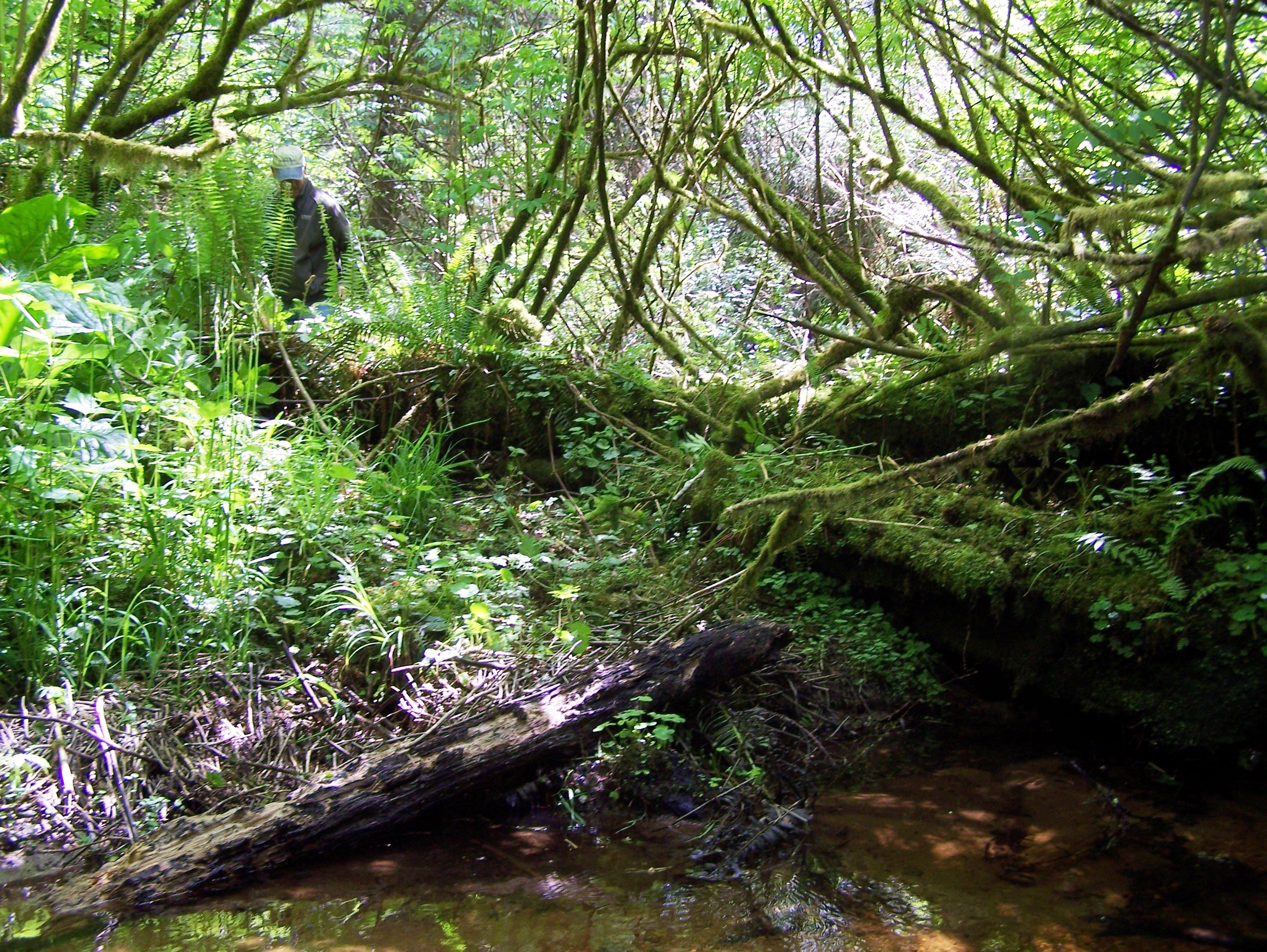
We next went to Norton Gulch, a small stream that flows into its own bay. We carefully places our leaves in the stream where they will quietly decompose for the next two months. We saw a few newts there, wandering through the brush. In this small gulch there must be higher humidity. Being winter many of the trees had lost their leaves but there was still a green halo around the stream where the branches were covered in moss. Like. 3-4 inches of moss. Enough moss to give the branches a hairy look.
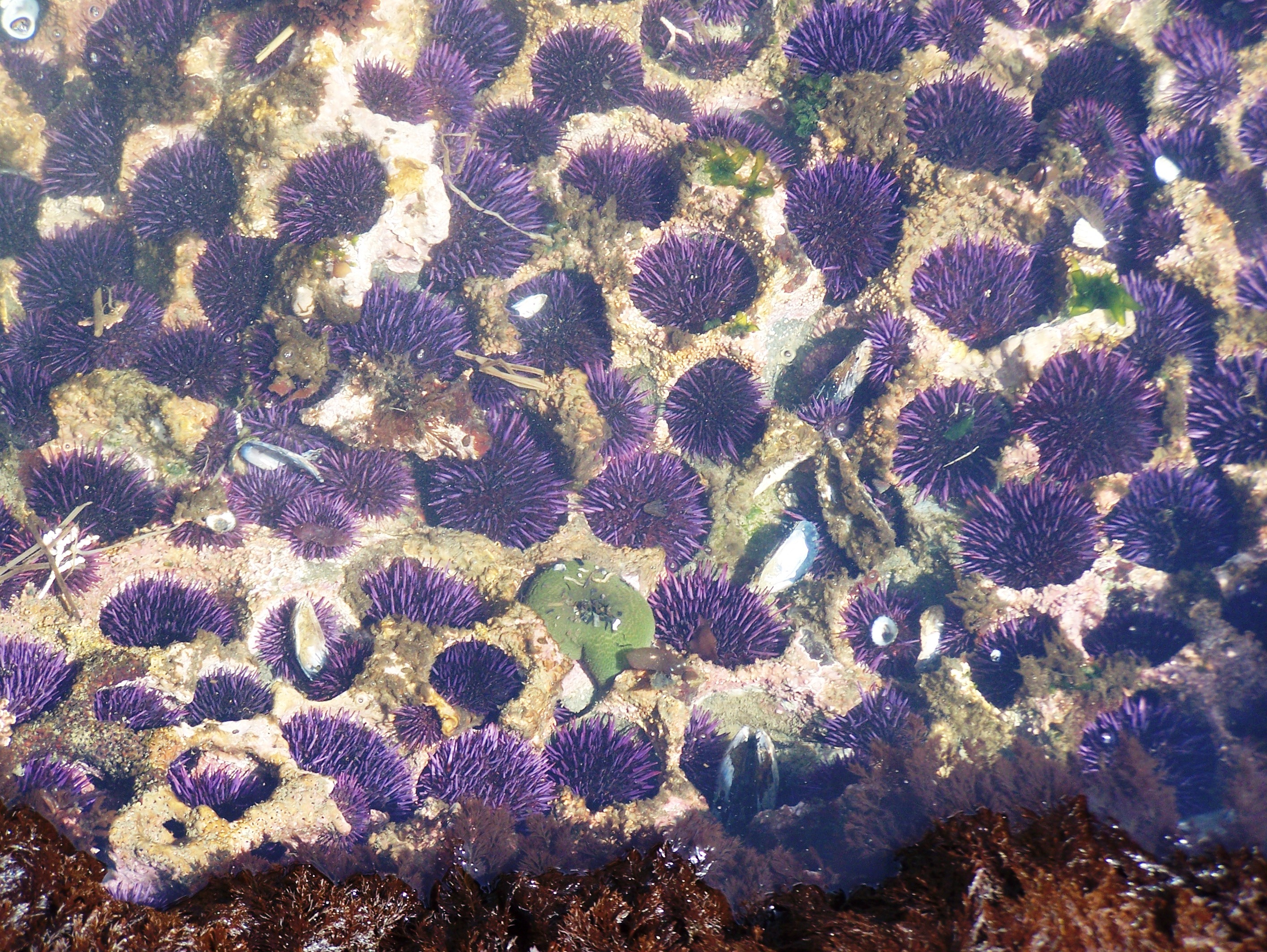
We placed packs in another stream then took off lunch. In the afternoon we packed up more leaves and kelp and went to a small bay on the coast. We spent a few hours attaching our packs to bricks which we carefully placed in the kelp zone of the intertidal. At low tides this bay is very sheltered. It opens to a pretty narrow channel but very large waves hit that channel and blast through it. The kelp zone was covered with Urchin holes. Dr Rader thinks the urchins use preexisting holes in the limestone which they hollow out to fit themselves. In any case the rocks look like Swiss cheese and are full of urchins. There are otters in the area that appreciate that. Laying out our packs we discovered that the hermit crabs had pounced on the kelp packs instantly shoving bits of kelp into their little mouths. The kelp here dies off in the winter, I imagine the hermit crabs feel the hunger it leaves behind.
Notice how many sea stars are in this picture from 2012
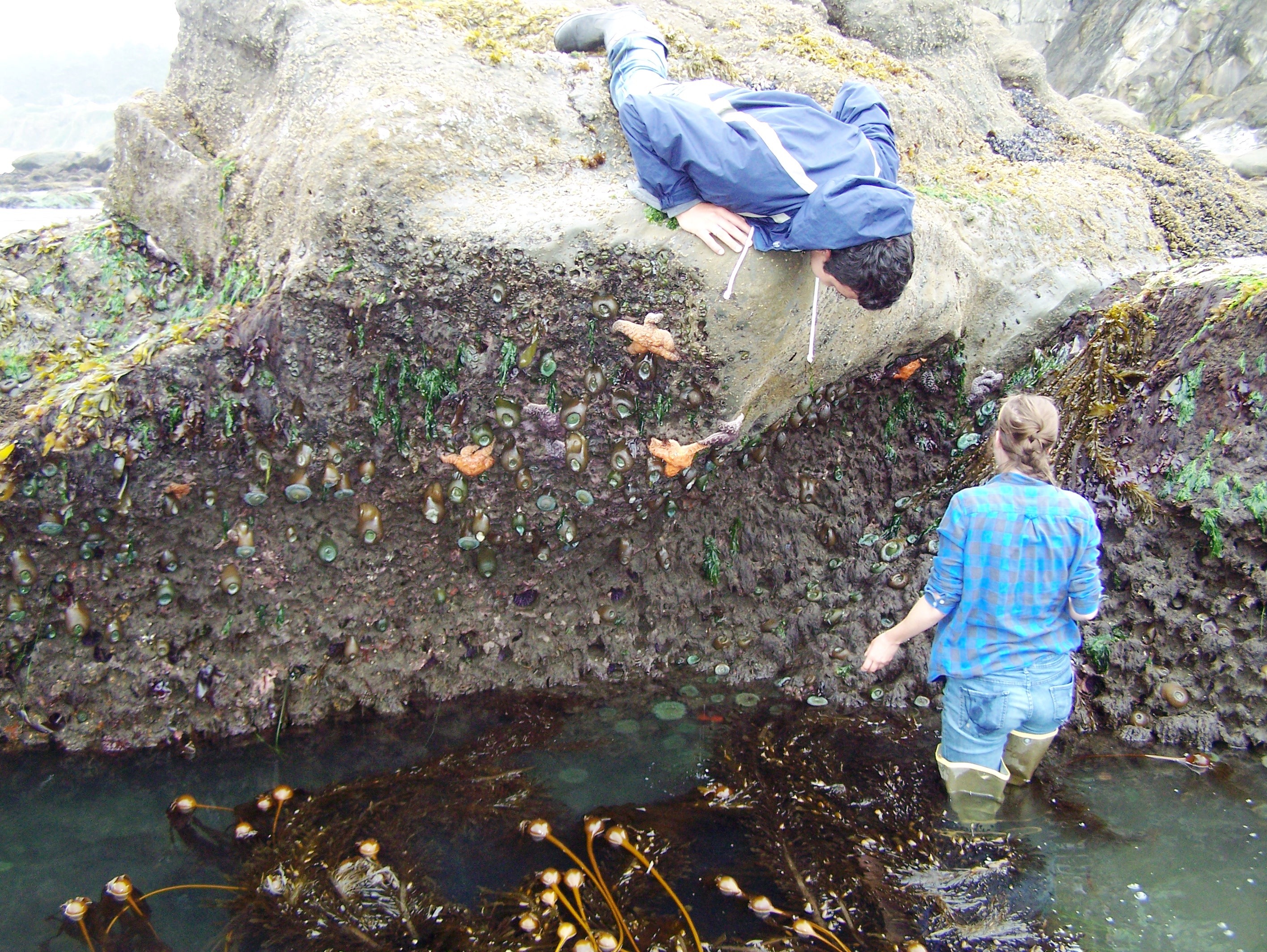
We saw only two sea stars on this trip. I first went to Oregon in 2012 and there were dozens of Ochre stars all over the tide pools. They would chow down on everything as voracious predators. About a year ago I returned and we found far fewer of them. Maybe a 10th. There is a virus which is decimating the population of sea stars up and down the coast from Alaska to California. They call it sea star wasting disease. 5 months ago we would only see a handful, and only three sunflower stars in a month. In these three days I’ve only seen one ochre star and one six armed star, that is perhaps a 30th of what I would have seen here two years ago. What will happen to the immense diversity of this coastline and the rocky shores if the apex predator disappears? Will the mussel move down the shore? With the kelp get attacked by hordes of hermit crabs that no longer have sea stars to fear? Ecological disaster is hitting the tide pools, our only hope being that those few sea stars that survive have some sort of resistance to the virus and can recover the population sufficiently.
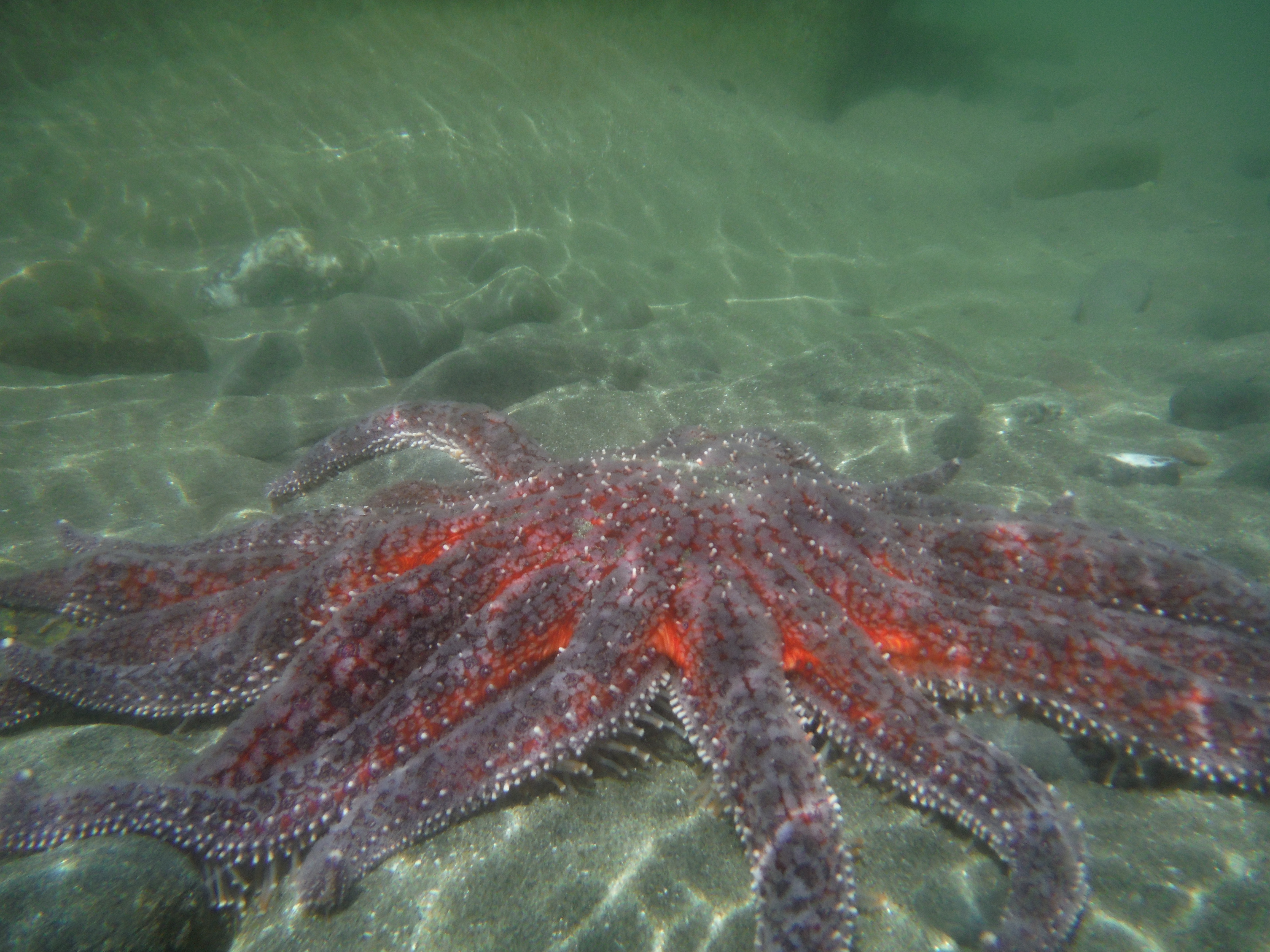
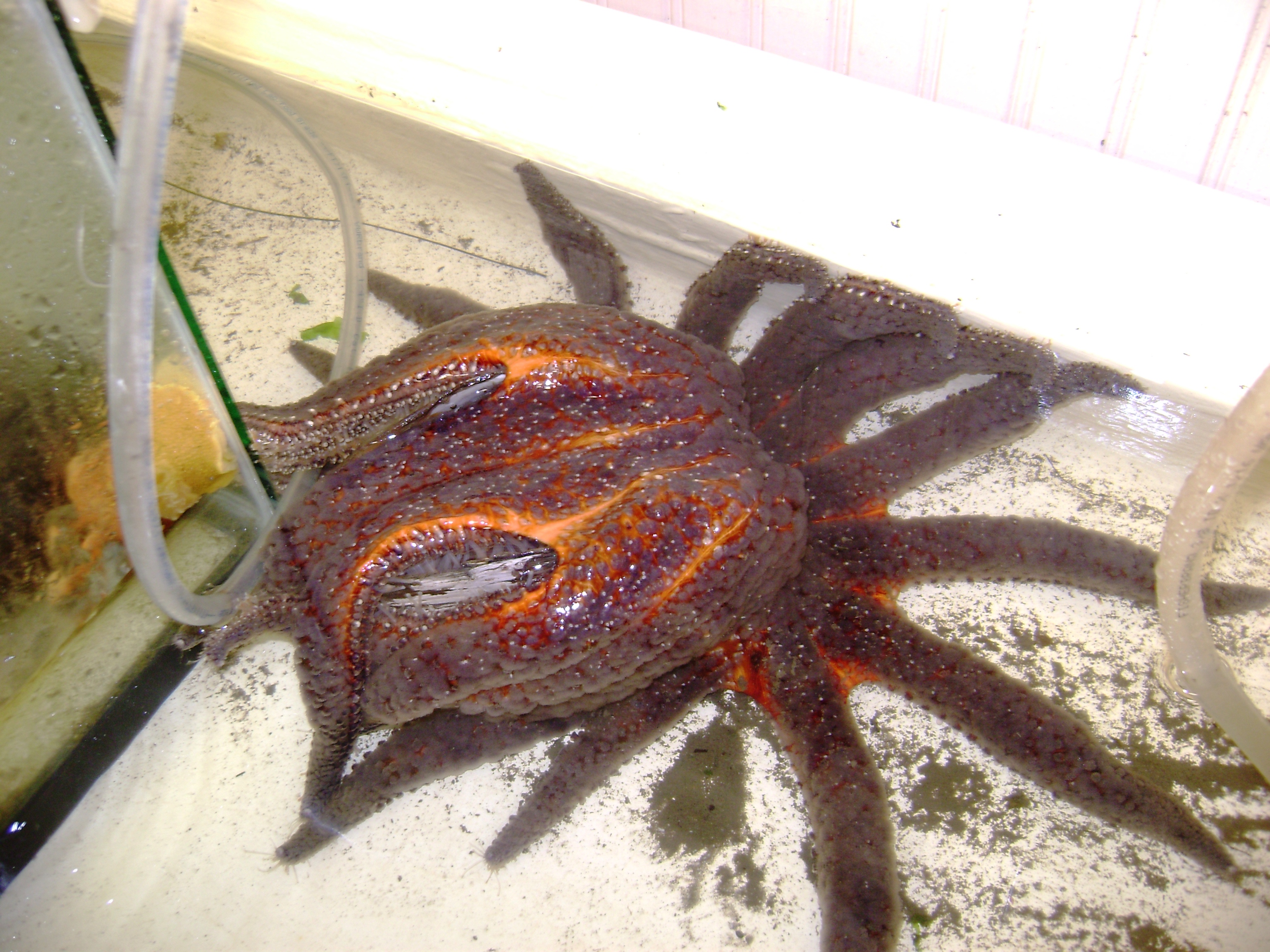
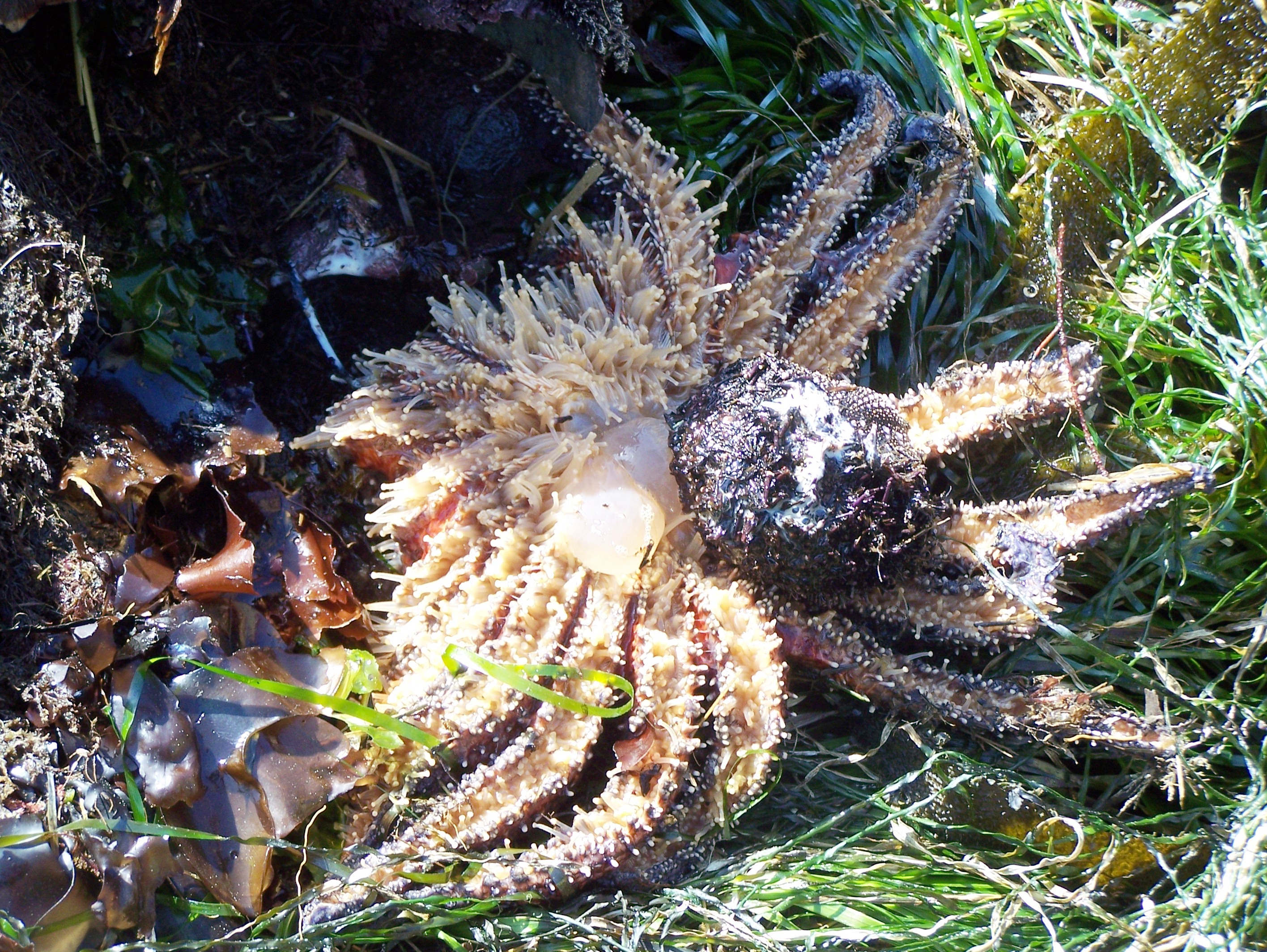
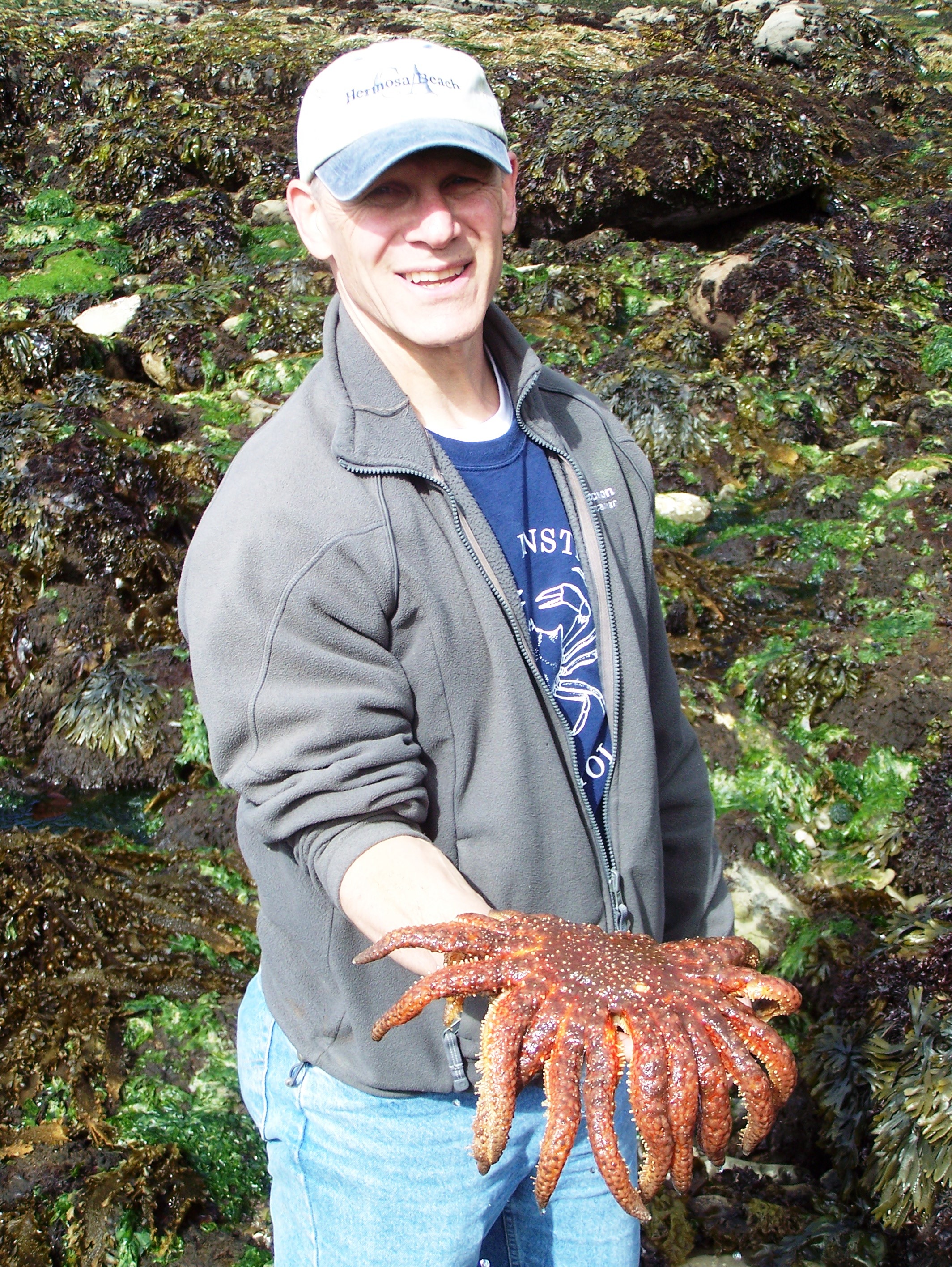
This is the sunflower sea star that we found in 2012. It is one of the coolest organisms I’ve ever captured. You can see his stomach in some of these picture. Truly this is the terror of the tide pools.
Recent Comments